
The Hidden Dangers of DIY Excavation & Trenching in Middle Tennessee

It’s a tempting weekend project. You need to run a new water line out to the barn in Santa Fe, bury an electrical conduit in Spring Hill, or dig a drainage trench to keep water away from your foundation in Franklin. You drive past the local equipment rental yard, see a mini-excavator sitting there, and think, “How hard can it be?”
The truth? Moving dirt looks easy right up until you’re the one in the operator’s seat.
Quick Summary: Why DIY Excavation is a Risky Bet
Utility Strikes: Paint on the ground isn't enough; hitting a gas or fiber-optic line can cost tens of thousands in fines and repairs.
Cave-Ins: Just one cubic yard of dirt weighs up to 3,000 lbs. Unsecured trenches can collapse instantly.
Tough Terrain: Middle Tennessee is notorious for solid limestone and dense red clay that will easily break lightweight rental equipment.
The Mess Left Behind: Without proper backfilling and professional hauling, you're left with sinking yards and giant piles of debris.
While taking the DIY route on basic landscaping might save you a few bucks, DIY excavation and trenching is an entirely different animal. Here is why you should always know where to dig—and why hiring a professional is the smartest investment for your property.
1. The High Cost of Utility Strikes (Knowing Where to Dig)
The most critical rule of excavation is knowing exactly what lies beneath the surface before the bucket ever touches the ground. Middle Tennessee’s ground is a web of buried infrastructure, including:
High-pressure gas lines
Primary electrical cables
Water and sewer mains
Delicate fiber-optic internet lines
As a property owner, you are legally required to call 811 before you dig, but standard utility marking is only step one. Paint on the grass doesn't tell you exactly how deep a line is, and utility markers can sometimes be feet off their actual mark.
If a DIY operator catches a gas line or severs a fiber cable, the consequences are immediate. Beyond the severe safety hazards (like electrocution or gas leaks), the homeowner is legally and financially responsible for the repairs and outage fines. Professional excavators are trained in safe "potholing" techniques and have the experience to carefully navigate around live utilities.
2. The Physics of Dirt: Trench Collapse and Cave-Ins
A trench doesn't have to be massive to be deadly. Many DIYers vastly underestimate the sheer weight of the earth. Just one cubic yard of dirt can weigh between 2,000 and 3,000 pounds—roughly the weight of a compact car.
When you dig a trench for a water line or retaining wall, you remove the soil's natural support. Without professional techniques like proper sloping, benching, or shoring, trench walls can collapse in a fraction of a second. Professional excavation crews understand soil mechanics, local weather impacts (like how a recent Maury County rainstorm destabilizes trench walls), and safety protocols to ensure the site remains secure from the first scoop to the final backfill.
3. The Middle Tennessee Terrain: Rock, Clay, and Broken Equipment
You rent a machine, get it delivered, start digging, and two feet down you hear a terrible grinding noise. You've hit solid bedrock.
Our local terrain presents massive challenges for lightweight rental machinery:
Williamson County (Brentwood, Franklin, Leiper’s Fork): You are almost guaranteed to hit dense limestone ledges.
Maury County (Columbia, Spring Hill, Santa Fe): You are dealing with heavy red clay that turns into concrete when dry and slick, unmanageable mud when wet.
Rental yards equip DIYers with entry-level machinery that simply doesn't have the breakout force to handle Tennessee rock or heavy root systems. You end up paying for a weekend rental, making zero progress, and potentially losing your deposit to equipment damage.
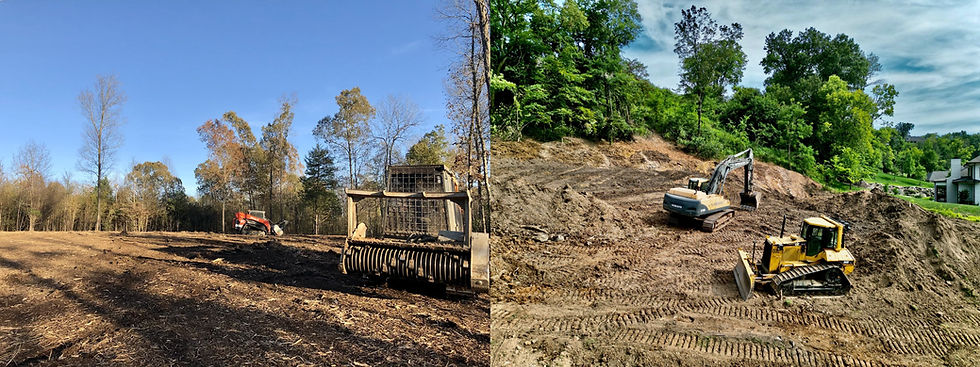
At American Excavation & Land Clearing, we don't mess around with undersized machinery; we deploy serious, professional-grade equipment for every project. We have a versatile fleet of equipment ready for both tight residential spaces and large-scale commercial jobs. Our commercial-grade excavators and specialized attachments are built to chew through rock, roots, and hardpan without missing a beat.
4. The Aftermath: Improper Backfilling and Hauling
Digging the hole is only half the job; putting the dirt back is where DIYers often fail.
When you dig a trench, the dirt you pull out expands—a term known as "swell." When you put it back, if it isn't compacted correctly in strategic layers, it will inevitably settle over time. Fast forward six months, and you are left with a massive, sinking divot across your yard that collects rainwater and creates a mowing hazard.
Furthermore, you almost always end up with excess dirt, rock, and debris. You can't just leave a giant pile of spoils in your pasture or driveway. Part of our comprehensive service at American Excavation is Hauling. We keep a clean site. If dirt or rock needs to be removed, our trucks load it up and haul it away so your property is pristine and ready for the next step.
Leave the Heavy Lifting to the Professionals
Excavation and trenching require precision, heavy-duty equipment, and years of experience reading the dirt. A botched DIY trench can lead to ruined utility lines, structural drainage issues, and severe safety risks.
At American Excavation & Land Clearing, we’ve been doing this since 2015, taking the guesswork out of the dirt phase for our clients. Because we are fully equipped for both residential and commercial jobs, no project is too big or too small. Whether you need precise trenching for utilities in Primm Springs, heavy stump grinding to clear a path in Arrington, or a laser-graded foundation pad in Columbia, our crew does it safely, efficiently, and correctly the first time.
Don't risk your weekend, your wallet, or your safety. If you have a project coming up in Maury or Williamson County, Contact Us Today to get it done right.


Comments